 Vertically Integrated Systems
 Vertically Integrated Systems
 Vertically Integrated Systems
This study investigates 850 nm self-injection locked, laterally coupled-cavity vertical-cavity surface-emitting lasers (CC-VCSELs) and demonstrates that the lineshape of their two fundamental supermodes indicates their dynamic behavior.
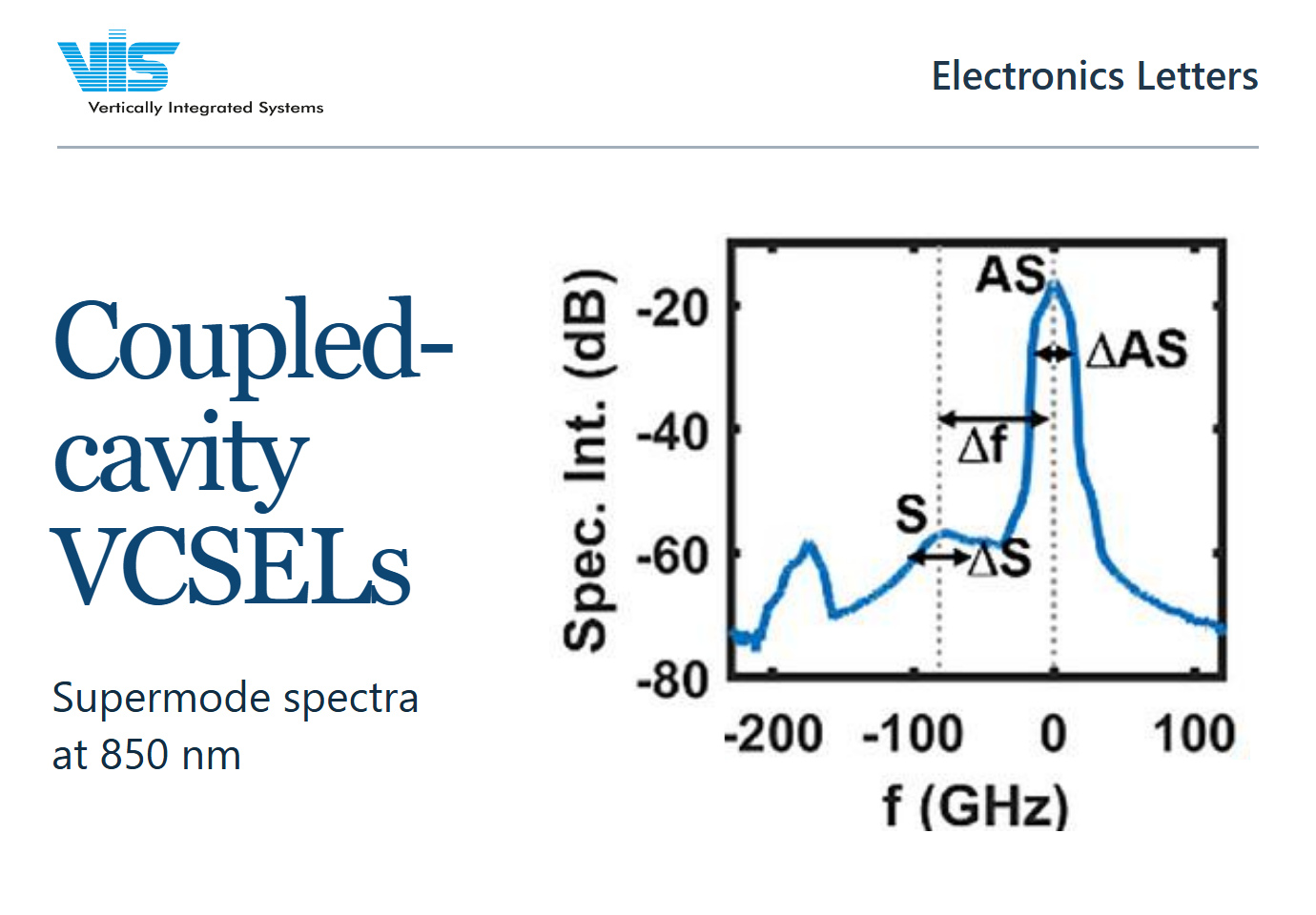
Connecting the cavities via a narrow bridge creates higher losses for the symmetric mode than the anti-symmetric mode, which triggers self-injection locking.
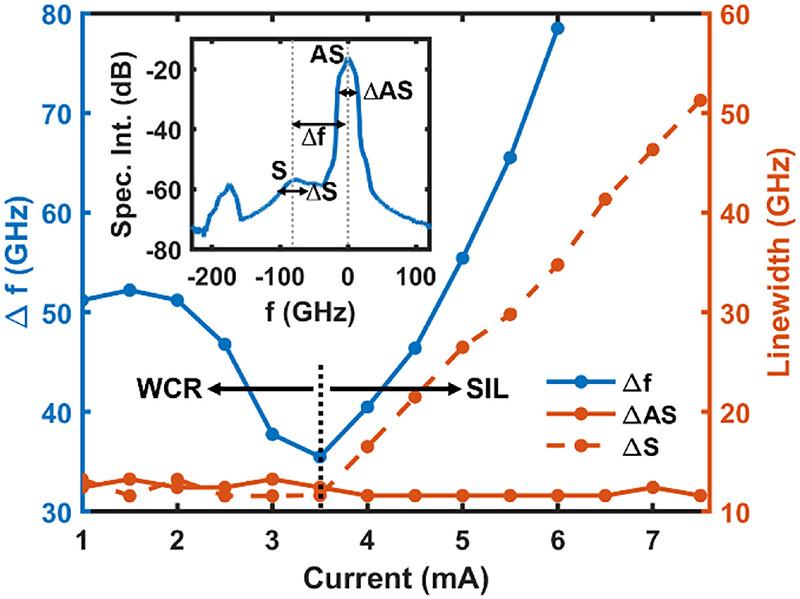
As the bias current increases, the splitting frequency, suppression ratio, and symmetric mode linewidth all grow together, broadening the modulation resonance and enhancing its damping. These findings show that larger loss differences between the modes promote broader resonances, providing design guidelines for ultra-high-bandwidth single-mode datacom lasers.
Thomas de Adelsburg Ettmayer et al., Electronics Letters, vol. 62, no. 1, article e70768 (2026).


