 Vertically Integrated Systems
 Vertically Integrated Systems
 Vertically Integrated Systems
We demonstrate a laterally-coupled-aperture vertical-cavity surface-emitting laser (VCSEL) that achieves stable self-injection locking by using a shaped metal aperture with a simple etched surface pattern in a dielectric cap. By controlling external losses and localizing supermodes, the design forces the antisymmetric supermode to dominate.
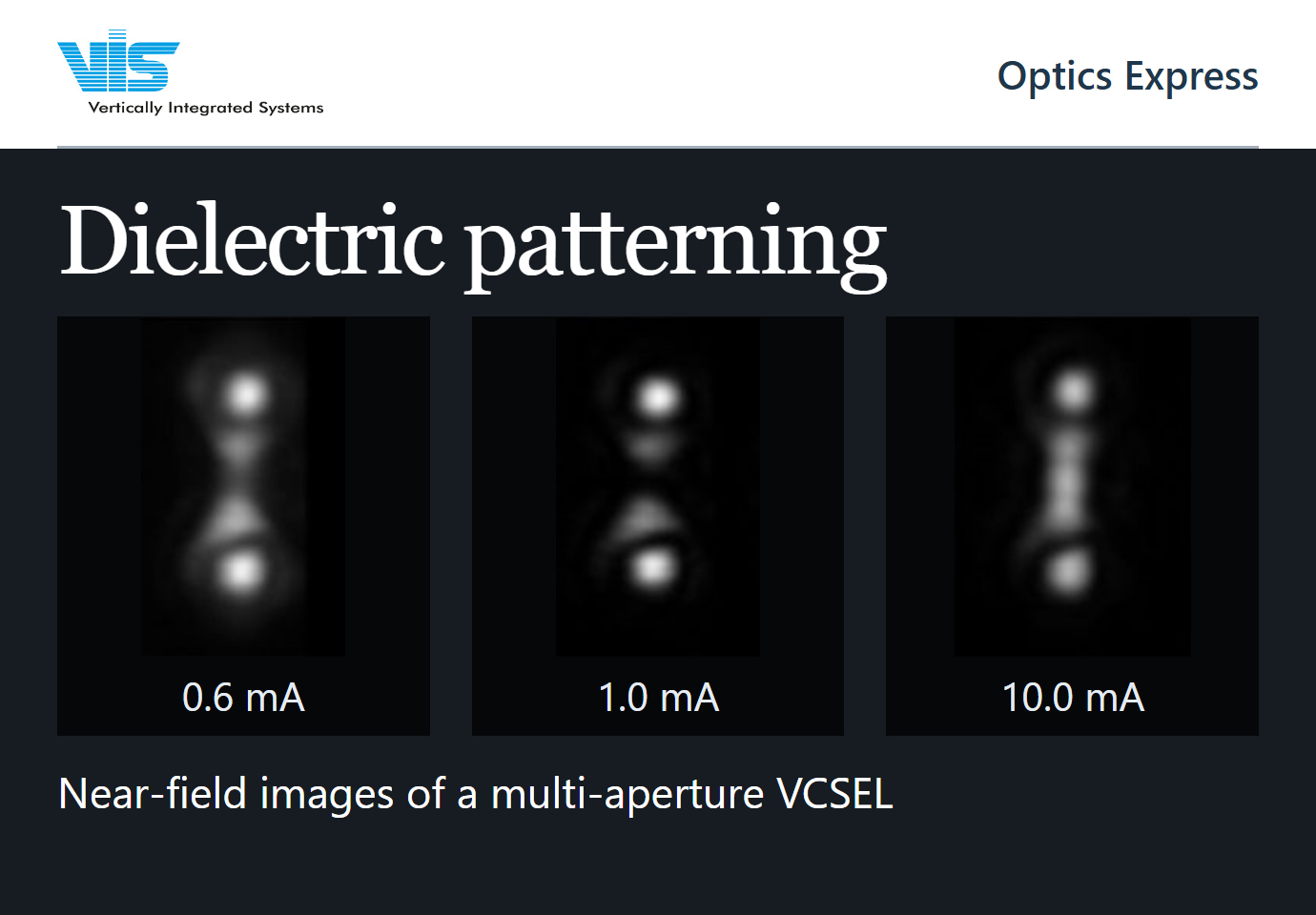
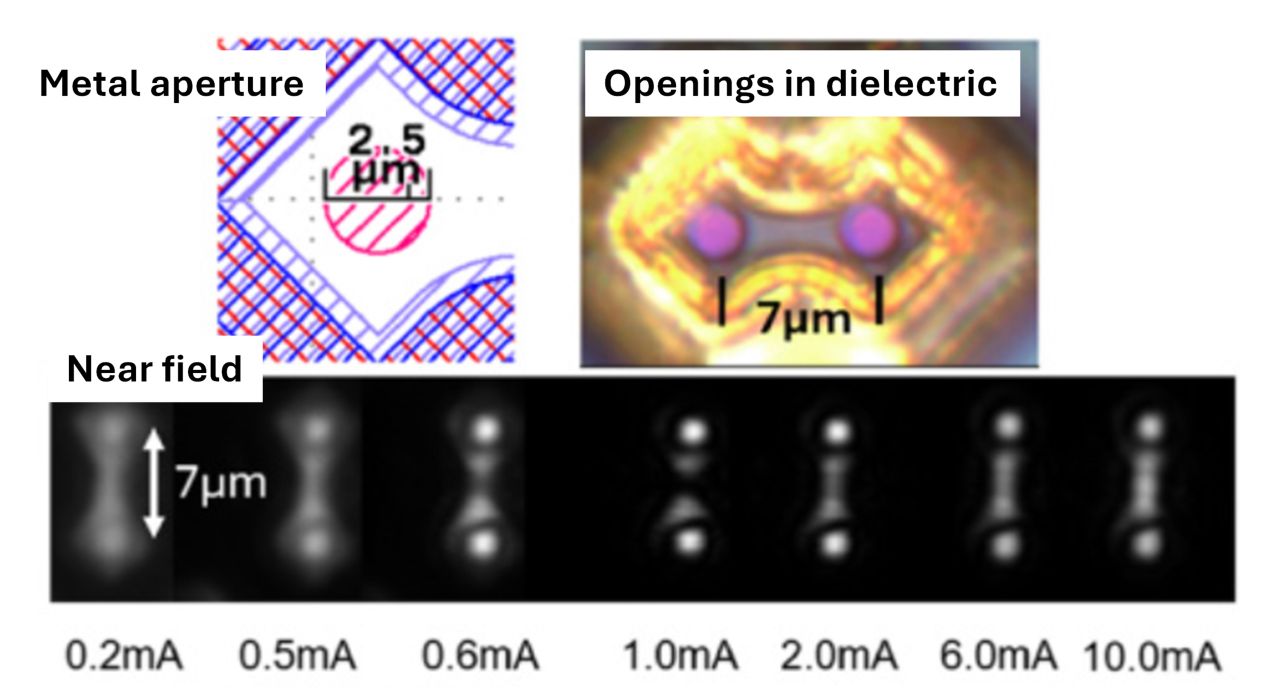
Polarization-stable, quasi-single-mode operation can be realized without oxide technology, even with large metal-confined apertures. The electrical modulation bandwidth of 24 GHz, limited by electrical parasitics, enables 50 Gbaud operation and is suitable for 107 Gb/s PAM4 data transmission.
Stable self-injection locking is important for broadening the frequency resonance defined by the frequency splitting of the supermodes to support next-generation optical links.
N. N. Ledentsov et al., Optics Express Vol. 34, Issue 19, pp. 35941–35949 (2026).


